
R585 Comparison
| photo | price | summary | rating |
|---|---|---|---|
 | $155.00 | Condition is Very Good, VINTAGE PETERBILT OWNER'S MAINTENANCE MANUAL 1970S-1980S, FREE SHIPPING | 100.0% |
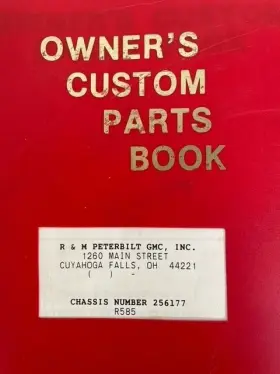
Peterbilt R585 Owner's Manual (1970s-1980s)
The Peterbilt R585 is a legendary model in the transport industry, renowned for its durability and strong performance. This heavy-duty Class 8 truck was a favorite among trucking companies and owner-operators during the 1970s and 1980s. For anyone fortunate enough to own one of these iconic vehicles, the Peterbilt R585 Owner's Manual from this era is an essential companion to ensure optimal usage and maintenance.
This manual serves a comprehensive, detailed guide to operating and maintaining the Peterbilt R585 from the 1970s and 1980s. It includes photographs, diagrams, and illustrations that vividly explain each component's function and offer helpful troubleshooting tips for addressing potential issues. Essential topics covered span engine specifications, transmissions, braking systems, electrical systems, and suspension configurations.
Fuel efficiency and engine performance take center stage, with the manual discussing optimal fuel consumption techniques, engine idling procedures, and recommended maintenance schedules. Detailed information on engine models, including the 350-series and 400-series, is included, ensuring a personalized experience for owners of various iterations.
Safety is an essential focus, with ample coverage on essential features such as the cab's windshield wiper system, lighting installation, brake system maintenance, and cargo securement procedures. In addition, recommendations for regularly checking critical fluids, such as oil and coolant, are provided to enhance safe operation and extend the product's lifespan.
Maintenance and repair sections are an integral part of the Peterbilt R585 Owner's Manual, providing illustrations and guidelines on routine tasks like cabin filter replacement, lubrication schedules, and occasional repairs that ensure your truck remains dependable and safe.
Lastly, this extensive manual offers advice on accessories and customizations, inspiring creativity that turns the Peterbilt R585 from just a tractor trailer into a unique, one-of-a-kind journey.
Overall, the Peterbilt R585 Owner's Manual from the 1970s and 1980s is an indispensable resource for R585 owners seeking to optimize their vehicle's performance, ensure safety, and maintain its classic character while maximizing its potential as a reliable, efficient, and iconic commercial vehicle.
Pros and Cons of Owning a Peterbilt R585 Engine From the 1970s-1980s
Introduction:The Peterbilt R585 engine, produced by Peterbilt Motors Company between the 1970s and 1980s, was a popular choice for truck owners during that era. This heavy-duty diesel engine offers specific advantages and drawbacks for its users. In this analysis, we will examine both the pros and cons of owning a Peterbilt R585 engine.
Pros:1. Reliability: Known for their durability and robustness, Peterbilt R585 engines were built to withstand the rigors of heavy-duty use, making them a reliable choice for commercial applications.
2. Fuel Efficiency: The R585 engine was more fuel-efficient compared to some contemporary engines, resulting in lower operating costs and better overall productivity.
3. Power: The engine's dual-turbocharged design produced impressive horsepower and torque, making it well-suited for hauling heavy loads and towing trailers.
4. Serviceability: The easy-to-access design features of the R585 engine made it simple to perform routine maintenance, saving time and labor costs.
Cons:1. Emissions Compliance: The R585 engine does not meet modern emissions standards, which may require costly modifications or upgrades to pass inspections or operate in specific areas.
2. Obsolete Parts: As an older engine design, replacement parts for the Peterbilt R585 can be difficult to find and expensive, increasing the long-term maintenance cost.
3. Fuel Quality: The R585 engine leverages a conventional fuelling system, making it susceptible to fuel quality issues, such as gelling or premature fuel degradation, which may lead to unexpected engine downtime.
4. Limited Technology: The engine's technological capabilities are limited compared to more modern alternatives, such as electronic fuel injection systems or selective catalytic reduction technologies, leading to reduced engine efficiency and performance potential.
Conclusion:The Peterbilt R585 engine, while offering several advantages, such as reliability, fuel efficiency, power, and serviceability, also presents considerable challenges in the form of emissions compliance, obsolete parts, fuel quality issues, and outdated technology. The decision to own a Peterbilt R585 engine ultimately depends on your specific needs, budget, and priorities. If your operations primarily focus on low-emission areas, have access to ample fuel resources, and you are seeking a robust and proven engine design, the R585 engine from the 1970s-1980s may be a suitable choice for you. However, if your concerns lie with regulatory compliance, reducing long-term maintenance costs, or maximizing engine efficiency, alternative options may be more beneficial.
Recommendation:Choosing between expanding your fleet with a Peterbilt R585 engine and investing in a more modern engine ultimately depends on various factors such as project requirements, long-term goals, and available budget. It is recommended that you carefully consider the potential strengths and weaknesses of both options based on these factors, seeking guidance from industry consultants or qualified professionals as needed.
If you prioritize emissions compliance, fuel efficiency, and longevity, you may want to consider newer engine models with superior emission control systems, electronic fuel injection, and improved fuel compatibility. In contrast, if you're attracted to the historical significance and reliability of a Peterbilt R585 engine, it could serve your needs admirably if you manage the potential challenges effectively, such as compliance with emissions regulations and sourcing parts efficiently. In either case, weighing the pros and cons carefully and seeking expert advice is essential to making an informed decision.
Details:
specifications heavymanualbooks:
- brand: Peterbilt
- mpn: R585
- part type: Manual
- country/region of manufacture: United States
shipping heavymanualbooks:
- service: usps ground advantage
- carrier: usps
- type: calculated
- class: standard
- transit: 3-10 days
general heavymanualbooks:
- category: Business & Industrial > Equipment, Attachments > Parts Accessories > Heavy Manuals Books
payments heavymanualbooks:
- cash
- check
- other
- wallet: paypal
- money order
- credit card: diners-club
seller heavymanualbooks:
- rating: 100.0%
- # reviews: 139
- city: brook park, ohio
returns heavymanualbooks:
- policy: returns accepted
- paid by: buyer
- method: money back
- time: 30 days
offer heavymanualbooks:
- price: $155.00
- item condition: Very Good
- best offers: true
- availability: in stock
- in stock #: 1
- sold #: 18
- started: february 10, 2025
- options: ship-to-home