
VDM-1 Comparison
| photo | price | summary | rating |
|---|---|---|---|
 | $36.73 | Condition is Good, Processor Technology VDM-1 Video Display Module Assembly & Test Manual 1976, FREE SHIPPING |  |
| photo | price | summary | rating |
|---|---|---|---|
 | $49.99 | Top Pick! Condition is , VDM-1 Video Display Module Assembly Test Instructions 1977 Processor Technology, shipping cost = $5.22 | |
| photo | price | summary | rating |
|---|---|---|---|
 | $36.22 | Top Pick! Condition is Used, Processor Technology vdm-1 users manual 1976, shipping cost = $17.86 | 99.2% |
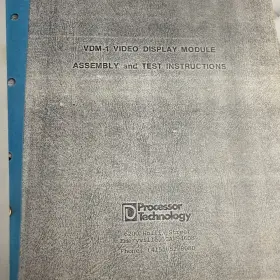
VDM-1 Video Display Module Manual (1976)
The VDM-1 Video Display Module manual, published in 1976, is an essential document for operators and engineers working with the VDM-1 Video Display Module, a significant piece of technology from the early days of video computing. This manual provides comprehensive information on the installation, operation, and maintenance of this video display module.
The VDM-1 Video Display Module is an analog video display system designed primarily for use in scientific, engineering, and industrial applications. The module generates high-quality, real-time video images from digital data, making it an indispensable tool for data visualization in various industries. This manual not only guides users in setting up and utilizing the VDM-1 but also offers a deeper understanding of the underlying principles and components of the video display module.
The manual begins by outlining the key features and specifications of the VDM-1 Video Display Module. It details the input and output interfaces, including the number and types of connectors, as well as the corresponding voltage and signal levels. The manual also discusses the module's size, weight, and power requirements.
Next, the manual covers the installation process, from physically mounting the module in a suitable enclosure to connecting the necessary cables and power sources. It provides step-by-step instructions for setting up the module and offers troubleshooting tips for common issues that may arise during installation.
The operational section of the manual explains how to use the VDM-1 Video Display Module to generate and display video images. It covers the methods for inputting digital data into the module, such as using a data processor or a digital tape recorder. The manual also explains how to adjust various display parameters, like brightness, contrast, and color balance, to optimize the visual representation of the data.
Finally, the manual addresses maintenance and repair procedures for the VDM-1 Video Display Module. It includes a troubleshooting guide for common issues and offers suggestions for performing routine maintenance tasks. Additionally, the manual provides sources for obtaining replacement parts and offers contact information for technical support.
In summary, the VDM-1 Video Display Module manual (1976) is an invaluable resource for anyone working with this early video display technology. It offers a comprehensive understanding of the module's features, installation, operation, and maintenance, ensuring that users can effectively harness the power of the VDM-1 for their scientific, engineering, or industrial applications.
Pros and Cons of Buying a VDM-1 Video Display Module (1976) for Your Computer System
The VDM-1 Video Display Module was introduced in 1976 as a part of the IMSAI 8080 and Altair 8800 microcomputers. This display module allowed users to have a dedicated video output for their computers, making it an essential add-on for early computing enthusiasts. In this analysis, we will discuss the advantages and disadvantages of purchasing a VDM-1 Video Display Module.
Pros:1. Dedicated video output: The VDM-1 Video Display Module provided a dedicated video output for early microcomputers, which was a significant improvement over the basic text-based displays that came with these systems.
2. Improved productivity: The VDM-1 allowed users to display graphics and diagrams, making it easier to create and understand complex data. This could lead to increased productivity and a more engaging user experience.
3. Customizability: Users could create their own custom graphics and characters using the VDM-1's unique capabilities, which was a major draw for early computer enthusiasts.
4. Compatibility: The VDM-1 Video Display Module was compatible with various microcomputers, including the IMSAI 8080 and the Altair 8800, making it a versatile investment.
Cons:1. Limited capabilities: Compared to modern displays, the VDM-1 had limited capabilities. It could only display 40x24 characters or 20x24 characters with graphics, and the color palette was quite limited.
2. Complexity: Setting up and using the VDM-1 Video Display Module required a fair amount of technical knowledge, which could be a barrier for some users.
3. Cost: In today's market, the cost of acquiring a VDM-1 Video Display Module might be prohibitive for some, especially considering the limited capabilities compared to modern displays.
4. Availability: Finding a functional VDM-1 Video Display Module in good condition can be challenging due to its age and the fact that it was not a mass-produced item.
Conclusion:The VDM-1 Video Display Module was an essential add-on for early microcomputer systems, offering unique capabilities such as dedicated video output and customizability. However, its limited capabilities, complexity, cost, and availability might make it a less attractive option for modern users.
Recommendation:If you are an early computing enthusiast or a collector, the VDM-1 Video Display Module could be an interesting addition to your collection. However, for modern users looking for a functional display for their computer system, it might be more practical to invest in a modern display with better capabilities and ease of use.
Details:
Original Processor technology VDM-1 video display module assembly and test instructions manual 1976 corp. Manual is a single item, vintage 1970s computer electronics documentation showing expected wear for age including light handling and edge but all pages are intact legible; sold as shown reference, repair or collection by enthusiasts technicians. This vintage technical manual contains sections listed on the cover including contents, assembly and test, theory of operation, introduction, VDM-1 video display module, references to Altair; printed shows schematic/circuit board layouts assembly notes for module.
specifications heavymanualbooks:
- brand: Processor Technology
- mpn: Vdm-1
- part type: Video Display Module Manual Test
- compatible equipment make: Universal
- compatible equipment type: Technical Manual
- model year: 1976
- countryregion of manufacture: United States
- unit type: Unit
shipping heavymanualbooks:
- type: fixed
- service: usps media mail, usps priority mail
- carrier: usps
- transit: 5-12 days
- class: economy, expedited
offer heavymanualbooks:
- best offers: true
- started: august 10, 2025
- availability: in stock
- in stock #: 3
- sold #: 13
- prices: $36.22–$49.99
- item condition:
- Good
- Used
- options: ship-to-home
payments heavymanualbooks:
- other
- credit card: discover
- wallet: apple-pay
general heavymanualbooks:
- category: Business & Industrial > Equipment, Attachments > Parts Accessories > Heavy Manuals Books
returns heavymanualbooks:
- paid by: seller
- policy: returns accepted
- method: money back
- time: 60 days
seller heavymanualbooks:
- city: willis, texas
- rating: 100.0%
- # reviews: 477
Related To:
- OME125782-I1: PROCESSOR MANUAL, John Deere
- 1200T: PULL PROCESSOR MANUAL BOOK, Supreme
- BP5000: PROCESSOR MANUAL, Vermeer
- 105400U62: PROCESSOR MANUAL, Vermeer
- OM-E76112: PROCESSOR MANUAL, John Deere
- PM30: MANUAL BOOK, Arts Way
- BP7800: PROCESSOR MANUAL, Vermeer
- BP20: MANUAL PROCESSOR, Hesston
- 9-13535: CASE PROCESSOR MANUAL, Case
- M000-9600A: PROCESSOR MANUAL, Npk